If mould keeps coming back after you’ve painted, the paint isn’t the problem. Brisbane’s humidity, poor ventilation and hidden moisture are. To stop it returning, treat the mould properly, fix what’s feeding it and then use a suitable finish.
Why mould loves Brisbane
Mould needs moisture, warmth and something to grow on. Brisbane provides the first two for much of the year. Add a shaded wall that never dries, a bathroom with weak ventilation or a small roof leak, and paint becomes a very good place for it to live.
Don’t paint over it
Painting over mould is the most common mistake. The growth is still there under the paint, it keeps spreading and the fresh coat peels or stains within months. Mould has to be treated first.
How to treat it
- Clean the affected area with a product made for mould, following the label. Wear gloves and a mask and ventilate the room.
- Let the surface dry completely. Painting over damp walls traps moisture.
- Lightly sand and clean off any loose or flaking paint.
- Prime with a suitable stain-blocking primer if there are marks left behind.
- Apply topcoats made for the room’s conditions.
If the growth covers a large area, keeps returning or appears with a musty smell and damp plasterboard, get the cause assessed before doing more painting.
Fix what feeds it
This is where the lasting result comes from. Look at:
- Ventilation. Exhaust fans in bathrooms and laundries should actually vent outside and be used.
- Leaks. A roof, gutter or plumbing leak will feed mould in the same spot until it’s fixed.
- Drainage. Water pooling against outside walls can wick moisture into the structure.
- Airflow and light. Furniture pushed hard against walls and heavily shaded corners stay damp.
Our article on fixing water damage and mould before you repaint goes into the source-finding process in more depth, and it applies just as well to homes as to commercial buildings.
Choosing the right paint
Some interior paints are made for wet and humid rooms and include mould-resistant properties. They’re a good choice for bathrooms, laundries and kitchens, but they’re a help, not a cure. They work when the room is also ventilated and dry enough. Higher sheen levels are easier to clean. For general room advice, read our post on what makes a quality paint and our guide to interior versus exterior paint.
Outside walls and shaded sides
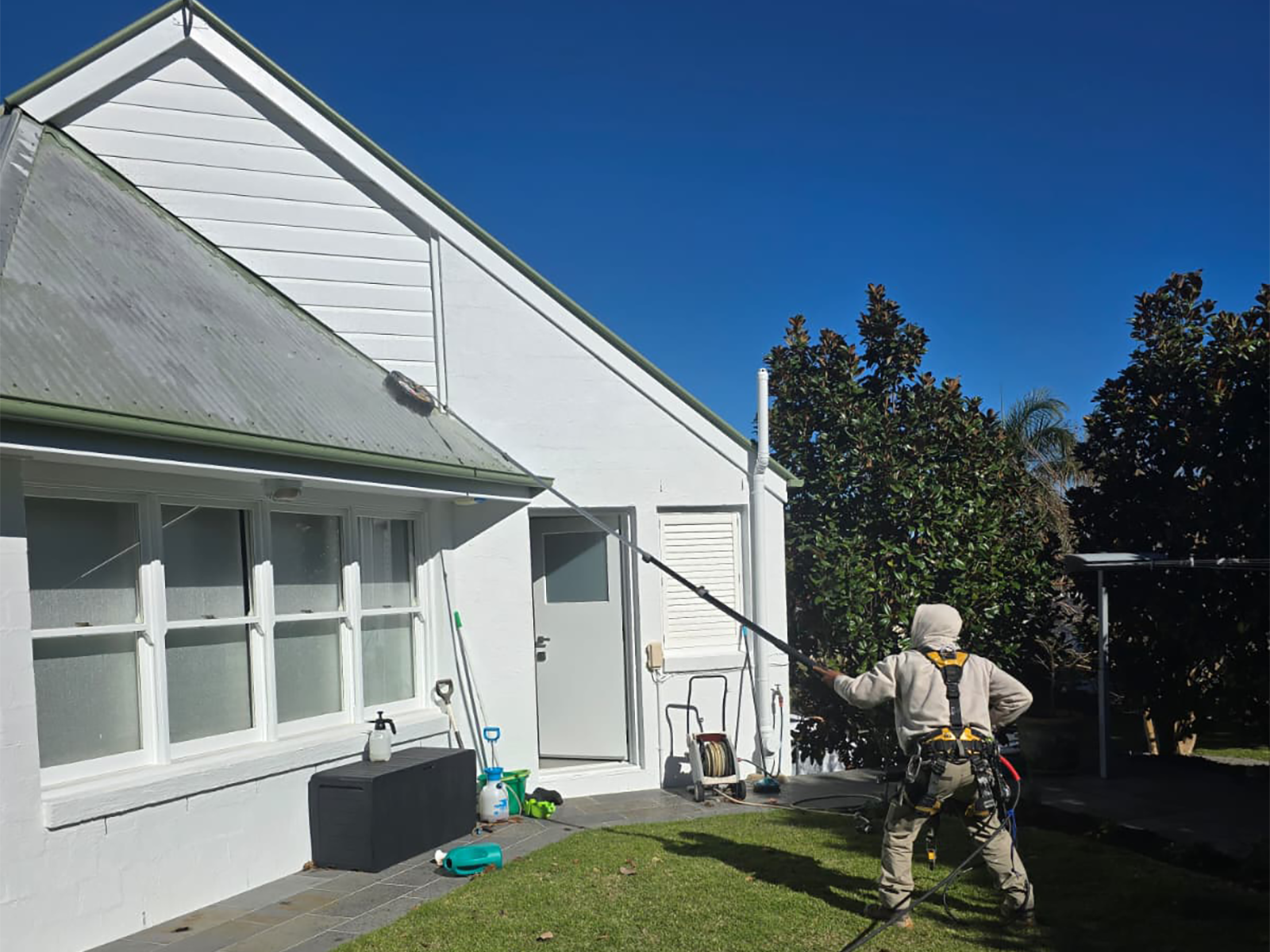
Exterior walls on the shaded side of a house often go green or black first. Washing them down before repainting removes surface growth and gives the new coat a clean surface to grip. Blocked gutters and overflowing downpipes make it worse, so fix those too. Our gutter preparation guide is a good starting point, and our exterior house painting service covers the whole job.
When to call a professional
Call in help if mould keeps returning after treatment, if walls feel damp or soft, if you see stains spreading on ceilings or if anyone in the household has breathing problems. In some cases the answer is a repair, not a repaint.
Treat it, fix it, then paint
That order is what keeps mould away. See our interior house painting service, or request a quote and call 1300 733 447.
McAuliffe Painting. Eagle Farm, Brisbane QLD 4009. QBCC Lic 1180874.