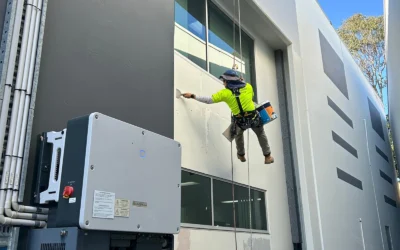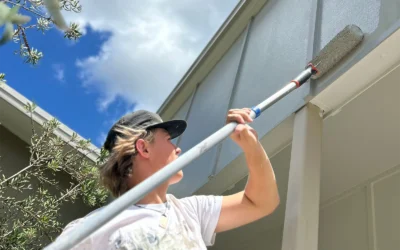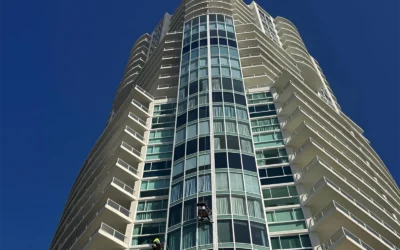

Spraying is faster on large, open surfaces and gives a smooth finish, but it needs a lot of masking and skill. Rolling is slower but more controlled and needs less set-up. On most jobs, professionals use both: spray for the big areas and rollers and brushes for detail and finishing. The right choice depends on the surface, the site and the finish you want.
Spray painting
A spray system atomises paint and applies it in a fine, even layer. It covers large areas quickly, reaches awkward shapes and can give a very smooth finish on doors, cabinets and flat walls.
The trade-offs:
- Masking is extensive, because overspray settles on anything nearby
- Wind and humidity affect the result, especially outdoors
- More paint is lost to mist than with rolling
- It takes practice to avoid runs, dry spray and uneven coats
- Good equipment is a real cost to buy or hire
Types of sprayer
Airless sprayers use a pump to push paint through a small tip and suit big surfaces. HVLP (high volume, low pressure) systems give finer control and less overspray and suit finishing work. Compressed-air guns give a very fine finish but need skill.
Rolling
Rollers are simple, forgiving and cheap. They give good control at edges and suit most rooms. With a quality roller cover, you get an even coat, and you don’t need as much masking. A brush is still needed for corners and cutting in.
The trade-offs:
- It’s slower on big areas
- Thick paints can leave stipple or roller marks
- A really smooth finish takes skill and good technique
Back-rolling: the best of both
On many exterior and commercial jobs, paint is sprayed on and then rolled straight away. That’s called back-rolling. It pushes paint into the surface for better adhesion and evens out the finish. It’s slower than spraying alone but produces a more durable result on porous surfaces.
What suits which job
- Large flat walls, ceilings and warehouses: spray, often followed by a roller. See our guide to painting warehouses and tilt-panel buildings.
- Occupied rooms and small areas: rolling, because it needs less masking and makes less mist.
- Doors, trims and detail: brush or fine-finish spray.
Paint use and cost
Spraying generally uses more paint than rolling because some of it becomes mist. Our guide to calculating how much paint you’ll need shows how to plan for it.
Let the surface decide
That’s usually how professionals choose. See our commercial painting and residential painting services, or request a quote.
McAuliffe Painting. Eagle Farm, Brisbane QLD 4009. QBCC Lic 15183972.