I’ve repainted buildings in Brisbane that should have lasted another five years and buildings already failing at year three. The difference usually comes down to two things: surface preparation and paint specification. Both decisions get made before a single brush stroke happens.
Queensland’s climate is hard on exterior paint. Most people understand that in a general sense but don’t translate it into product selection when it actually matters. This guide is for Brisbane homeowners, commercial property owners, and strata managers who want to understand what actually drives exterior paint performance in South East Queensland.
What Brisbane’s Climate Does to Exterior Paint
Brisbane is harder on exterior coatings than Sydney or Melbourne. The UV index in Brisbane regularly hits 12 or above during summer. That intensity accelerates paint breakdown significantly faster than in cooler, less sun-exposed markets. UV degrades the binder in paint, the component that holds the pigment in place and keeps the coating adhered to the substrate. When the binder breaks down, you get chalking, fading, cracking, and eventually adhesion failure.
Humidity is the second major factor. Brisbane averages around 60 to 70 percent relative humidity year-round, peaking during the October to April wet season. High humidity creates the conditions for mould and algae growth on paint surfaces, particularly on south and east-facing walls that see less direct sun. If existing contamination on the substrate isn’t properly treated before repainting, the new coat will show mould growth again within months.
Buildings in riverside precincts, New Farm, Teneriffe, Hamilton, Kangaroo Point, also have salt air from the river. Salt air accelerates corrosion of metal substrates and degrades paint adhesion over time. Thermal cycling is the third factor: the daily expansion and contraction of building materials as temperatures move from cool mornings to hot afternoons puts real stress on paint films. Coatings not formulated for flexibility crack at the points of maximum movement, usually around windows, joints, and corners. See our exterior house painting services and exterior commercial painting pages for how we approach this in practice.
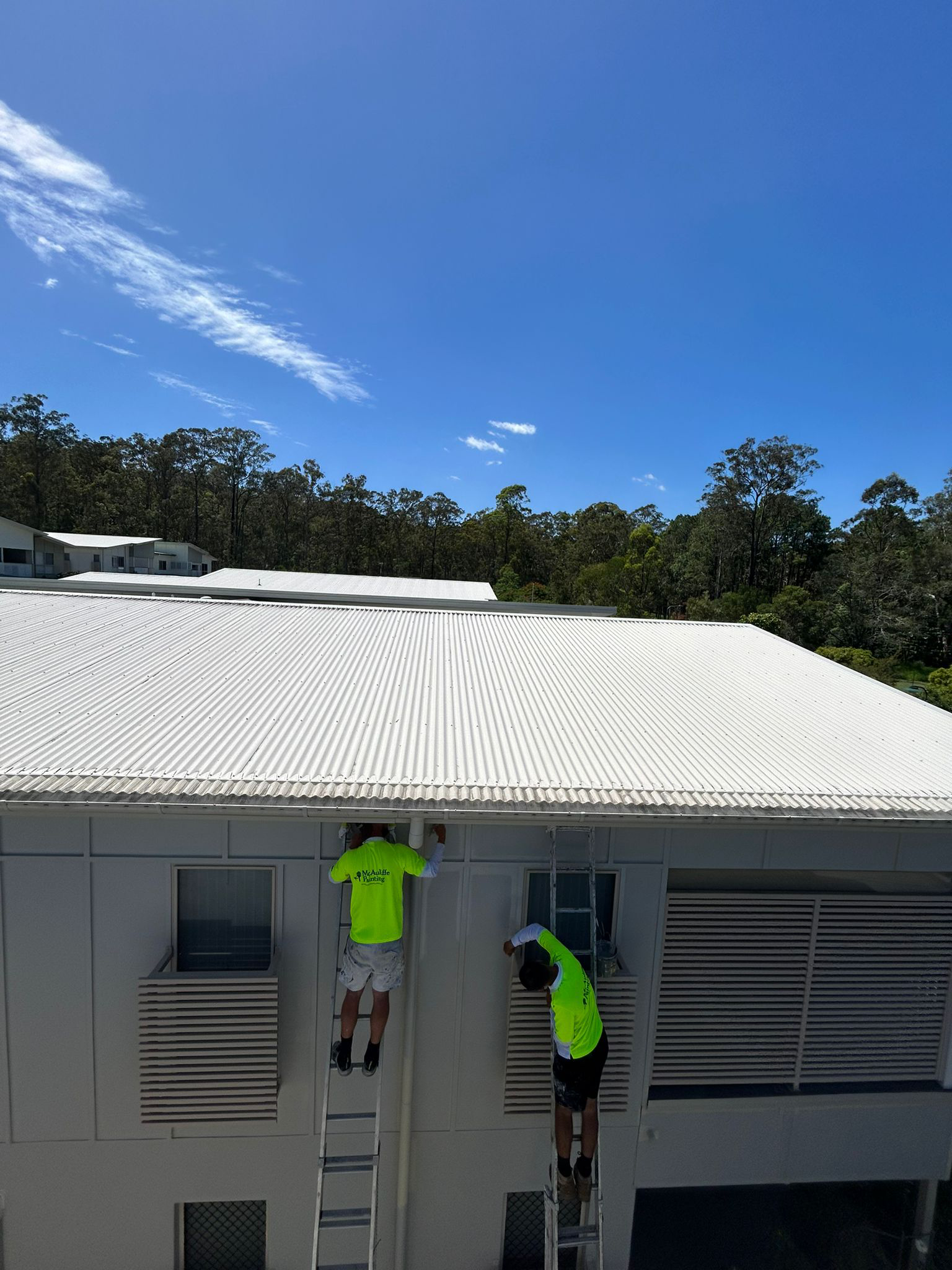
Paint System Types: When to Use Which
Standard exterior acrylic. The most commonly used exterior coating in Australia. Works well for residential brick, weatherboard, and fibre cement with appropriate primers and preparation. The quality range is enormous. A premium acrylic formulated specifically for high-UV environments performs very differently to a cheap commodity product. Always ask for the technical data sheet and check the UV resistance classification.
Elastomeric coatings. Formulated to bridge minor cracks and accommodate surface movement. Thicker, more flexible, and specifically designed for render and masonry surfaces prone to hairline cracking. Brisbane’s thermal cycling makes elastomeric systems worth specifying for render-clad commercial buildings and older concrete facades. They cost more per litre, but on susceptible surfaces the long-term performance justifies it. See our render painting services for more on this.
Two-pack polyurethane systems. At the premium end of exterior coating performance. They cure to a hard, chemically resistant film that handles UV, humidity, abrasion, and thermal movement significantly better than conventional acrylics. The specification of choice for high-rise commercial facades, industrial buildings, and situations where long service life is the priority. Application requires specialist equipment and training.
Low-VOC and zero-VOC formulations. Increasingly common in commercial and strata contexts in Brisbane where buildings are occupied during painting. Performance has improved substantially and these systems now meet the same durability requirements as conventional products in many applications. See our commercial property painting page for the coating systems we specify on commercial buildings.
Surface Preparation in a Humid Climate: The Most Important Part of the Job
Proper surface preparation is the most important factor in exterior paint performance in Brisbane. It’s also the part easiest to shortcut without it being visible until the coating starts failing.
For exterior work, preparation should include high-pressure washing to remove dirt, pollutants, and biological growth. Any mould or algae contamination should be treated with an appropriate biocide before painting. Washing alone doesn’t kill mould spores embedded in the surface. Painting over untreated contamination means the growth comes through the new paint system within months. This is one of the most common causes of premature coating failure in Brisbane’s humid conditions.
On masonry and render, any cracking should be assessed and filled with appropriate flexible filler before priming. Failing caulk around windows and joints needs replacement. On timber substrates, rot, soft grain, or loose material needs treatment or replacement before coating. On metal, rust treatment and appropriate metal primer are essential.
Primer selection matters too. The right primer for the substrate and the topcoat system creates the adhesion bond that holds everything in place for the life of the coating. An incorrect primer, or no primer at all on a bare or heavily weathered surface, is one of the most common causes of early paint failure we see on buildings repainted by others.
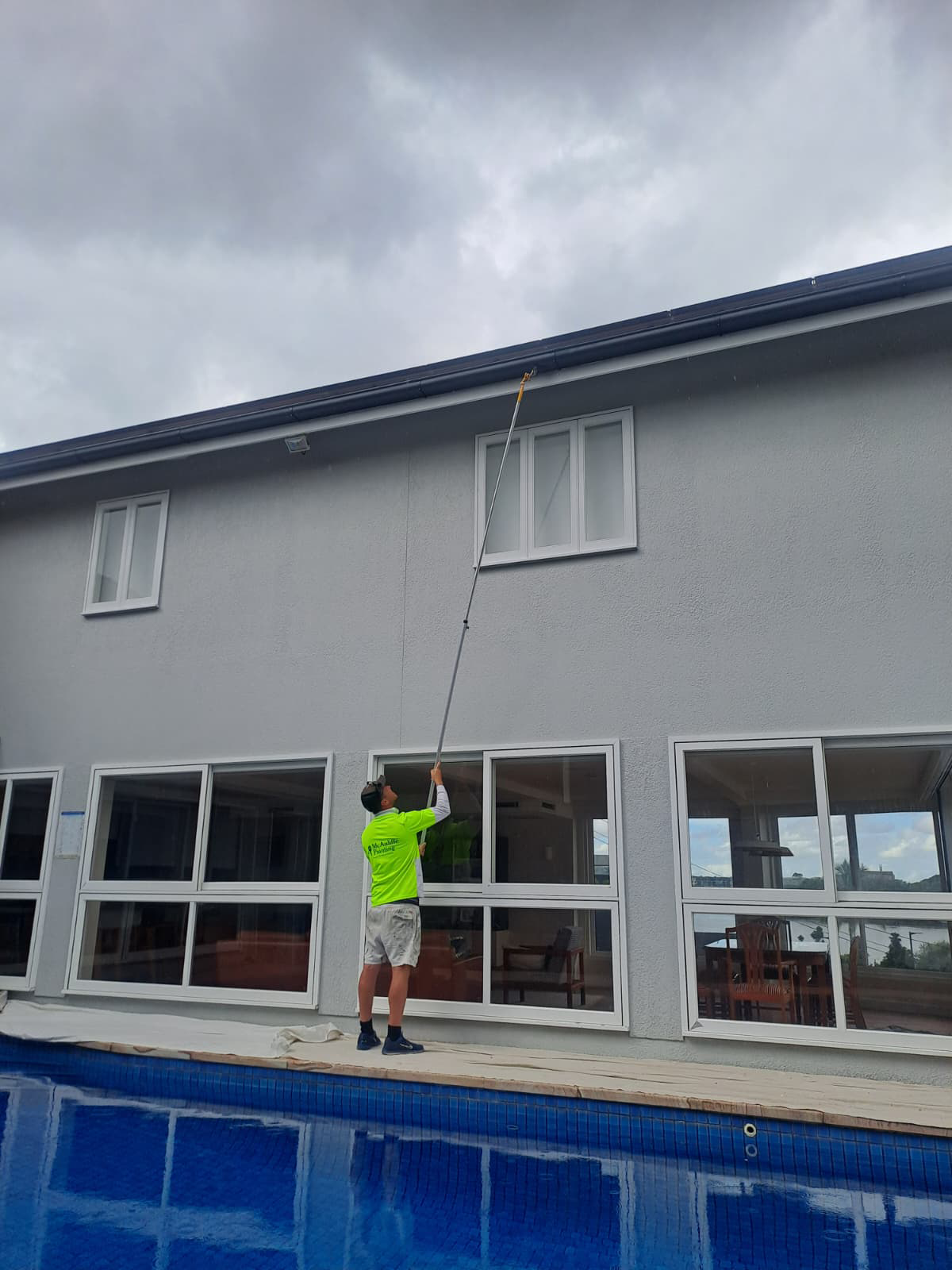
How Long Should Exterior Paint Last in Brisbane?
A properly prepared and coated residential exterior in Brisbane, using a quality acrylic system with appropriate primer, should last 8 to 12 years before repainting. Timber surfaces in high UV and weather-exposed positions are at the shorter end. Masonry and render in protected positions reach the longer end.
Commercial facades specified with premium polyurethane systems and proper preparation can achieve 12 to 15 years or more. High-rise facades in exposed riverside or coastal positions should be inspected at 8 to 10 years regardless of the original specification.
Interior common areas in strata and commercial buildings, high-traffic corridors, foyers, and lift lobbies, should be assessed at the 5 to 7 year mark. Failure in those spaces is usually scuffing and cleaning damage rather than environmental breakdown. A lot of buildings in Brisbane get repainted sooner than necessary because nobody kept records of when the last repaint happened or what system was used. Keeping those records makes maintenance planning significantly easier and helps you extract maximum value from each repaint cycle.
Signs Your Exterior Needs Repainting Now
Chalking. The paint surface leaves a chalky residue on your finger when you wipe it. The binder has degraded and the coating is reaching end of life.
Cracking or checking. Fine networks of cracks across the surface mean the film has lost flexibility and moisture can now penetrate. Don’t defer on this.
Blistering or bubbling. The coating is lifting from the substrate in patches. Usually indicates moisture trapped beneath the film from inadequate prep or water ingress through cracked joins or failed caulking.
Mould growth that reappears within months of washing. The contamination is embedded in the substrate. Biocide treatment is needed before the next repaint cycle.
Colour fading beyond expected age. Often indicates a UV-susceptible pigment or a product not rated for the exposure conditions at your location.
If you’re seeing any of these and aren’t sure whether to act now or wait, we include condition assessments in our quoting process. It doesn’t cost anything and it gives you a documented baseline.
Colour Selection for Brisbane’s Climate: A Practical Note
Dark colours absorb more heat than lighter ones. On dark-painted metal roofs, gutters, and fascias, surface temperatures in Brisbane summers can reach levels that accelerate coating breakdown substantially compared to a lighter equivalent. Dark render and masonry on highly sun-exposed facades also experience accelerated thermal cycling stress.
This doesn’t mean you can’t use dark colours. But if you’re specifying dark colours on high-exposure metal substrates or render, confirm with your contractor that the specified product is rated for high-temperature performance. Our colour consultation service covers advice specific to Brisbane’s climate conditions. And our gutters and fascia painting page covers the specific considerations for metal roofline elements.
Frequently Asked Questions: Exterior Painting Brisbane
How often should I repaint the exterior of my house in Brisbane? Most exterior paint systems in SEQ are designed for 8 to 12 years. High UV exposure on north and west-facing elevations, timber substrates, and salt-air environments push toward the shorter end. Protected masonry reaches the longer end. Inspect from year 6 onward for early signs of system failure.
What’s the best exterior paint for Brisbane’s humidity? Products formulated with mould-resistant additives and rated for high UV environments. Ask your painter for the technical data sheet. It should show the UV resistance class and any climate-specific recommendations from the manufacturer.
Can I paint my exterior during Brisbane’s wet season? It’s not ideal. High humidity slows drying and curing times and can affect adhesion. The dry season, May to September, is the preferred painting window for exterior work in SEQ.
Why is my exterior paint going mouldy so quickly? Three common causes: the original prep didn’t include biocide treatment of existing mould, the product used doesn’t contain sufficient fungicide additive, or there’s an active moisture source, a leaking gutter, inadequate flashing, or failed caulking, keeping the surface permanently damp.
Is it worth paying more for a premium exterior paint product? Yes, almost always, for exterior work in Brisbane. The cost difference between premium and commodity exterior coating is typically $8 to $15 per litre. In Brisbane’s climate, the performance difference can translate to three to five additional years of service life. The cost per year of service works out better with the premium product.
Planning exterior work? Read how long exterior paint lasts in Brisbane, the best time to paint in Brisbane and why moisture problems need fixing before you repaint. For commercial buildings, see making exterior commercial painting last.
McAuliffe Painting. Eagle Farm, Brisbane QLD 4009. QBCC Lic 15183972. For a no-obligation exterior painting quote and condition assessment, call 1300 733 447 or visit mcauliffepainting.com.au.