If you sit on a body corporate committee in Brisbane, or you manage strata schemes professionally, painting decisions come up regularly and they’re rarely straightforward. There’s the committee to satisfy, lot owners with strong opinions, residents who need to be kept informed, a sinking fund to draw from, and Queensland’s Body Corporate and Community Management Act sitting in the background.
I’ve worked with body corporate committees and strata managers across Brisbane for more than 30 years. Teneriffe, New Farm, West End, Kangaroo Point, South Brisbane, the CBD. The projects vary, but the questions are usually the same. Who’s responsible for painting what? How do you get a repaint properly approved? What happens when you don’t maintain the building and something goes wrong? This guide covers the legal framework, the practical process, and what to look for in a contractor.
Who Is Responsible for Painting Under the BCCM Act
The Body Corporate and Community Management Act 1997 (BCCM Act), current as at 1 August 2025, is the governing legislation for all community title schemes in Queensland. Under the Act, the body corporate is responsible for maintaining and repairing common property. Lot owners are responsible for their individual lots.
For painting purposes, the body corporate handles all external facades, common area interiors including foyers, corridors, car parks, and stairwells, and shared facilities. Individual lot owners handle the internal painting of their own units.
The BCCM Act uses a “like for like” maintenance principle, established through adjudicators’ decisions over many years, meaning maintenance that restores the building to its existing condition doesn’t require owner approval beyond what the committee can authorise. Repainting common property in the same or similar colour is maintenance. Proposing a significant colour change may require a general meeting resolution depending on your regulation module. This distinction matters when planning a repaint. If you’re proposing a colour change, get the right resolution in place before engaging a contractor. See our strata and body corporate painting services and unit complex painting page for more detail on how we work with schemes.
How Sinking Fund Contributions Work for Building Repaints
The sinking fund is the long-term maintenance fund that body corporates accumulate over time, and a scheduled building repaint is exactly the kind of major maintenance expenditure it’s designed to cover.
Under Queensland law, schemes with more than six lots are required to maintain a sinking fund and produce a sinking fund forecast projecting major maintenance expenditures over a 10-year rolling period. A building repaint should appear on that forecast. If it doesn’t, that’s a gap in planning and it’s the kind of thing that causes levies to spike suddenly when the repaint can’t be deferred any longer.
The most common problem strata managers raise is that the sinking fund estimate for painting is completely wrong because it was set based on an outdated figure or a ballpark number someone put in years ago. Building inspection reports and proper painter assessments, done while planning the forecast rather than when painting is already urgent, save schemes real money.
The BCCMOLA amendments that commenced 1 May 2024 introduced changes around termination, pet approvals, and smoking bylaws. The maintenance funding obligations under standard and accommodation regulation modules haven’t changed substantially. Committee spending limits remain: generally $200 multiplied by the number of lots per item for repairs the committee can authorise without a general meeting. For larger painting contracts, a general meeting resolution will almost certainly be required.
The Tender and Approval Process: Getting It Right
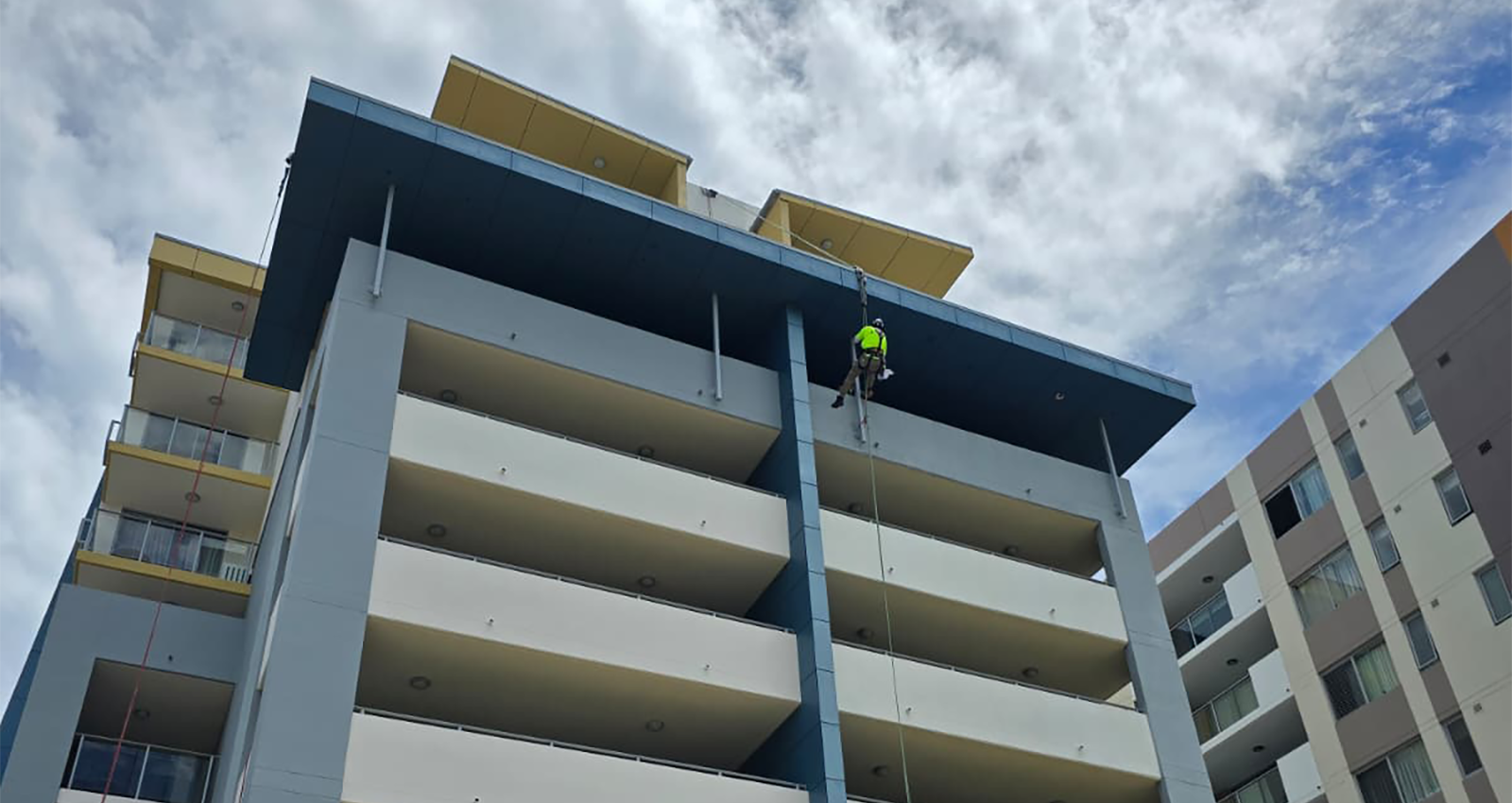
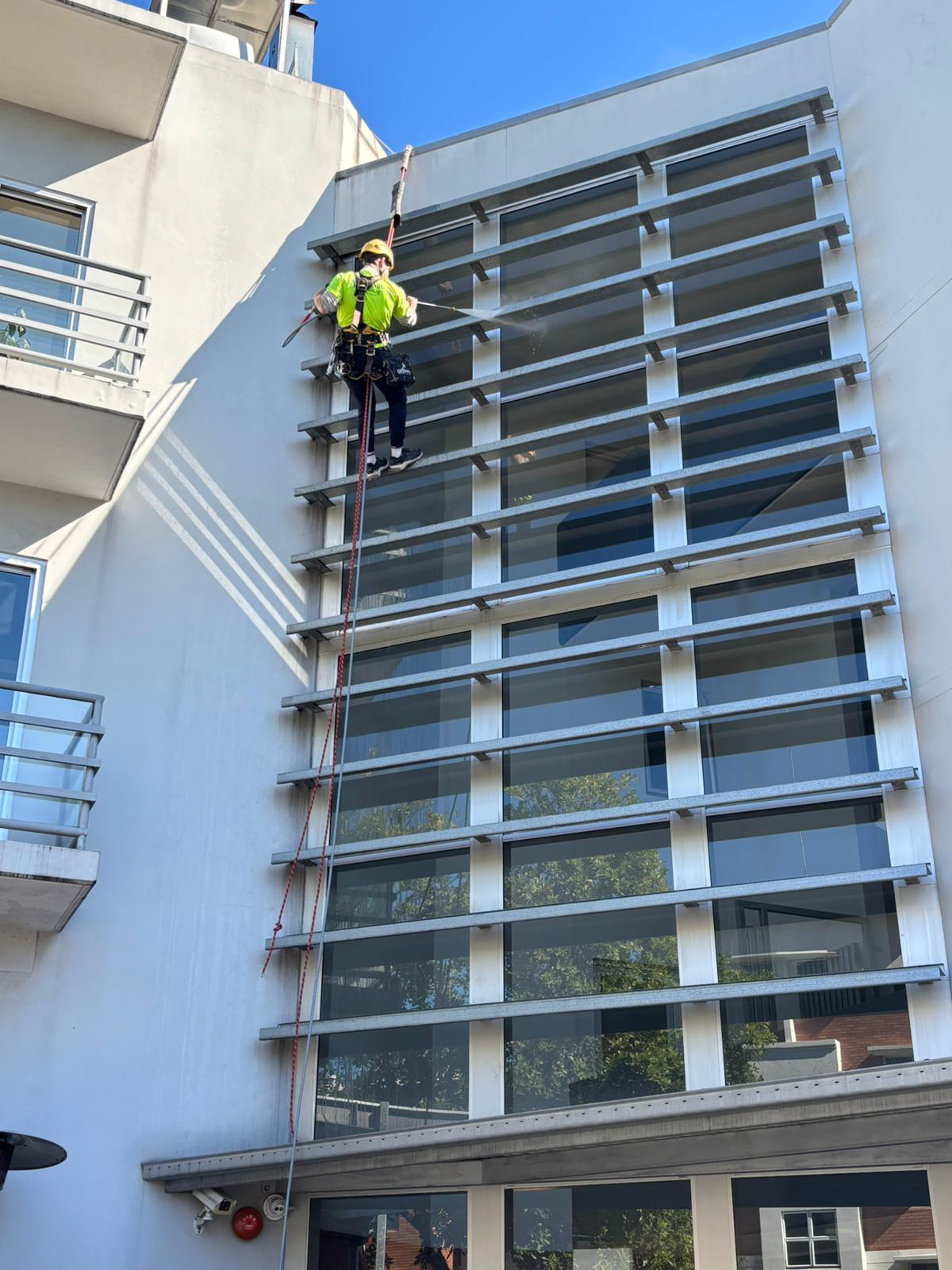
The committee approval process for a building repaint is where the most time gets wasted. Not because the process is complicated, but because committees often start it too late or don’t gather the right information before calling a general meeting.
Step 1: Condition report first. Get a building inspection or paint condition report done 12 to 18 months before you think you’ll need to paint. This gives you documented evidence of the building’s paint condition, a scope of works, and a credible estimate to present to owners. It also gives time to accumulate levy contributions if the sinking fund is short.
Step 2: Obtain itemised quotes. Get at least two or three quotes from QBCC-licensed contractors with body corporate experience. Quotes should break down facades, common area interiors, car parks, and any remediation work separately. A lump sum you can’t interrogate is not a suitable basis for a general meeting motion.
Step 3: Prepare the motion clearly. Owners respond better when they understand exactly what’s being painted, why, what it costs, and who’s doing it. A simple one-page summary works better than lengthy technical documents.
Step 4: Formal written agreement. Once approved, engage the contractor with a written agreement specifying scope, timeline, communication obligations to residents, and warranty terms.
Our team regularly attends committee meetings and owner information sessions to present scope and methodology in plain language. Take a look at our body corporate project gallery to see examples of recent work across Brisbane.
Managing Resident Communication During a Building Repaint
For a body corporate repaint in a live residential building, communication should start early and continue throughout. Before works begin, every resident on affected floors needs written notice: which areas will be worked on, what dates, whether windows need to be closed on specific days, whether access to car parks or common areas will be temporarily restricted, and who to contact with questions.
During works, regular updates keep committees informed and give residents a sense of progress. When something changes, whether that’s a weather delay or a scope adjustment, residents should hear from the contractor directly rather than finding out second-hand. We provide written pre-works notifications to all affected floors, maintain a project communication log, and designate a single point of contact for resident queries on every body corporate job we run.
Brisbane Climate Considerations for Strata Buildings
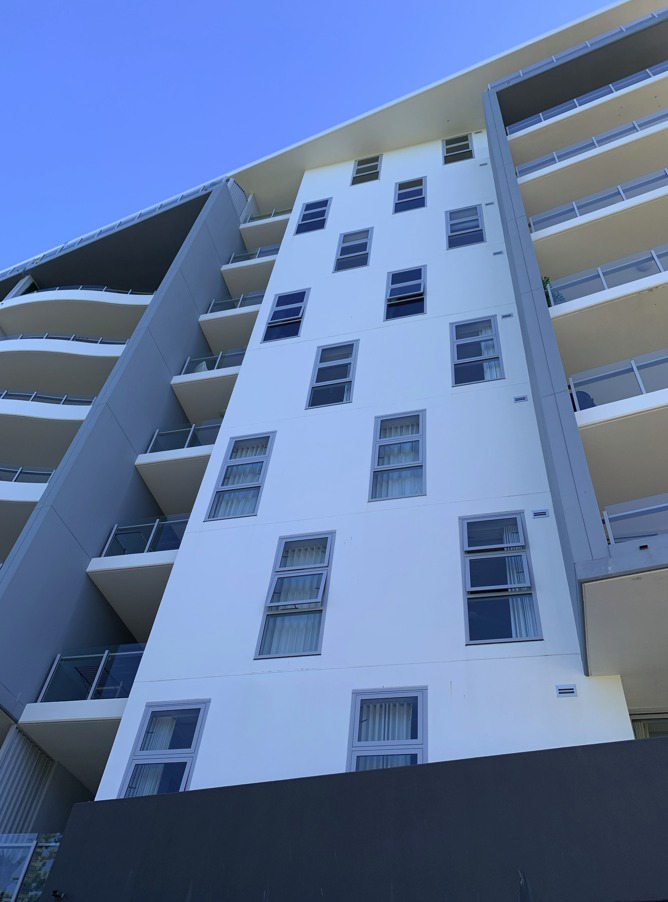
Brisbane’s subtropical climate creates specific maintenance challenges for multi-residential buildings. High UV exposure accelerates paint breakdown on facades, particularly on north and west-facing elevations. Humidity between October and April promotes mould growth in poorly ventilated common areas. Brisbane’s storm season brings hail damage, wind damage, and water ingress that starts small and becomes expensive quickly.
Most paint systems specified for Queensland residential buildings are designed for 8 to 12 years. Facades in high UV zones or with salt air exposure, riverside locations like New Farm, Teneriffe, and Hamilton, should be inspected at the 6 to 8 year mark rather than waiting until visible deterioration is obvious. See our health and safety approach for how we manage site safety across occupied residential buildings.
What to Look for in a Body Corporate Painting Contractor
QBCC licensing. Non-negotiable. Verify the licence number at qbcc.qld.gov.au before signing anything. McAuliffe Painting’s QBCC licence is 1180874.
Public liability insurance. For a large body corporate repaint in Brisbane, coverage well in excess of $5 million is standard. Ask for the certificate of currency.
Experience working in live residential buildings. This means understanding WHS obligations, chemical handling protocols for enclosed spaces, dust and noise management, and respectful conduct around residents. Commercial-only experience isn’t the same thing.
Detailed, itemised quoting. You should be able to see exactly what’s included and excluded, what surface preparation is specified, what paint systems are being used, and what warranties apply.
Compliance documentation. After the job you’ll need certificates, warranties, and compliance paperwork for body corporate records. Your contractor should provide this as standard, not when chased for it. Read why clients choose McAuliffe Painting and browse our client reviews to get a sense of how we work.
Frequently Asked Questions: Body Corporate Painting Brisbane
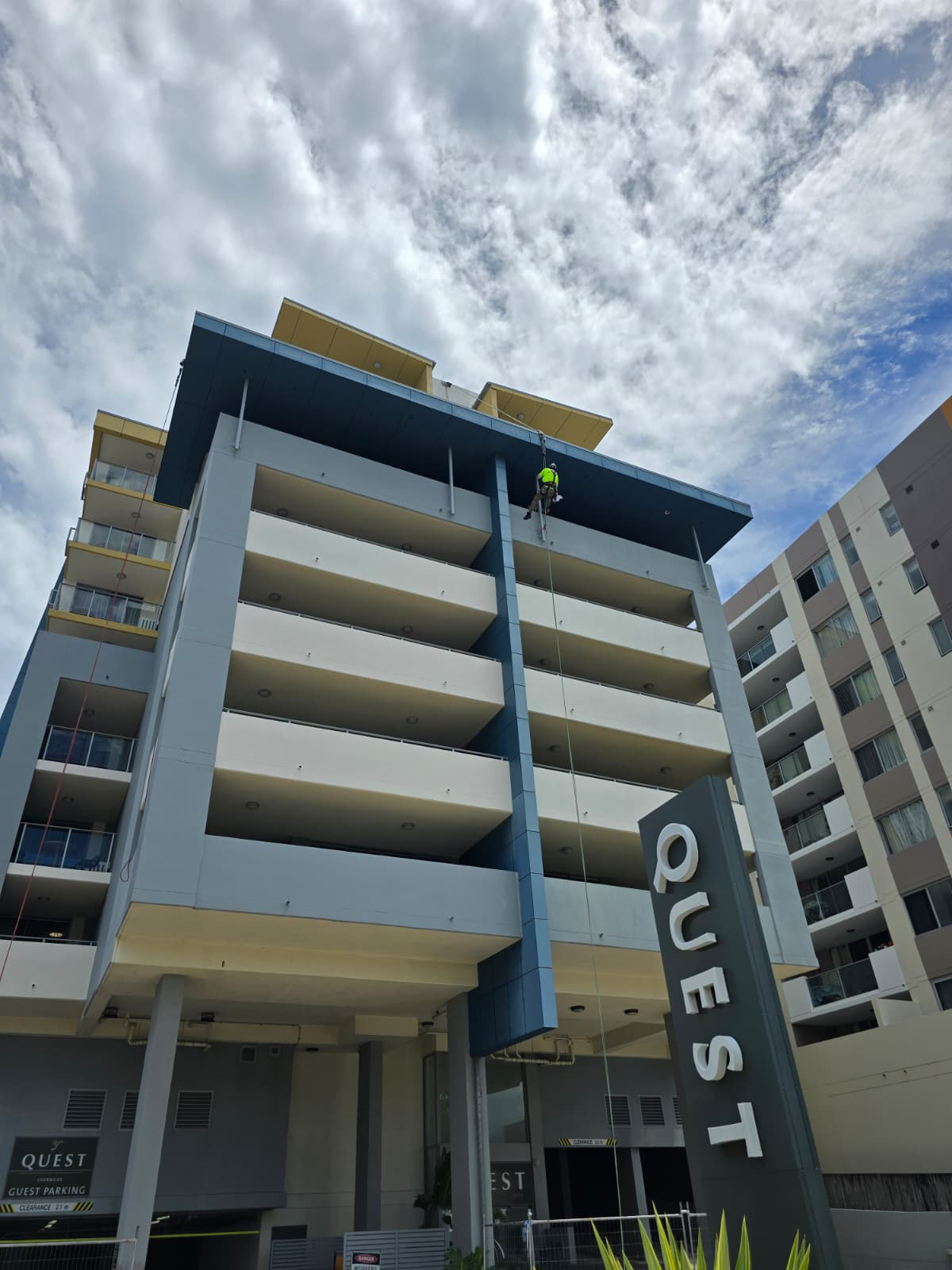
Does the body corporate or the lot owner pay for repainting exterior walls? Under Queensland’s BCCM Act, the body corporate is responsible for maintaining common property, which includes external facades. Lot owners cover internal painting of their own units.
Can a body corporate committee approve a painting contract without a general meeting? It depends on the contract value. The standard module allows the committee to authorise up to $200 multiplied by the number of lots per item. Most full building repaints will exceed this and require a general meeting motion.
What happens if a body corporate defers maintenance and the building deteriorates? Lot owners can apply to the Office of the Commissioner for Body Corporate and Community Management for orders requiring the body corporate to carry out maintenance. Deferred maintenance also affects building insurance and creates issues at property sale time.
How often should a body corporate in Brisbane repaint common areas? Interior common areas like corridors and foyers typically need attention every 5 to 7 years depending on traffic levels. External facades in SEQ every 8 to 12 years, with condition inspections from year 6 onward.
Can we paint the building ourselves to save money? No. Work on common property that exceeds a certain value requires a licensed contractor under Queensland law. Unlicensed building work voids building warranties and creates insurance complications.
McAuliffe Painting. Woolloongabba, Brisbane QLD 4102. QBCC Lic 1180874. For a no-obligation assessment and quote for your body corporate, call 1300 733 447 or visit mcauliffepainting.com.au.