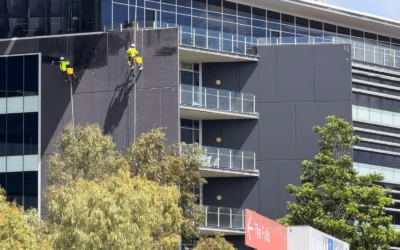
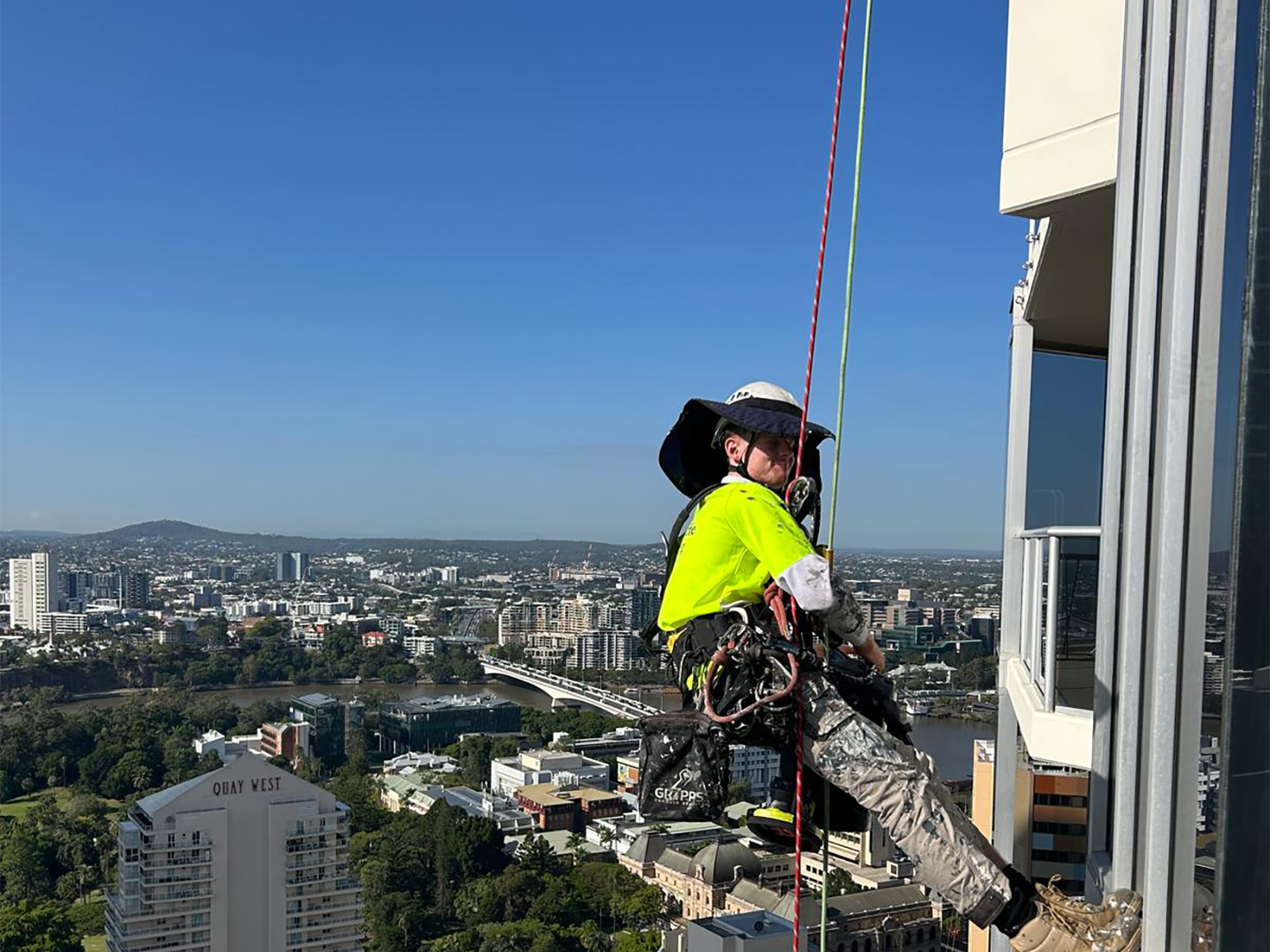
When a building is too tall or too awkward for ladders and scaffold gets silly expensive, you’ve got another option that a lot of property managers still don’t think of. Rope access. It’s painters on ropes, trained to work at height, reaching the parts of a building that nothing else can get to without a small fortune in steel and a month of setup.
People hear “abseiling painters” and picture something risky. The reality is the opposite. Done properly, with the right training and gear, it’s one of the most controlled ways to work at height there is.
How rope access painting actually works
Technicians work off two independent lines: one to hold their weight and one as a backup, anchored to certified points on the roof. They drop down the face of the building, prep and paint as they go, and move along section by section. No scaffold wrapping the building for weeks. No road closures for a boom lift. Just a small crew, ropes, and a lot of training. Our full rope access services and our dedicated abseiling painting pages walk through the gear and the method in more detail.
The safety side, because it matters
This isn’t an area to cut corners and we don’t. Our rope access work follows IRATA standards, the global benchmark for industrial rope access, and we work within Safe Work Australia guidance and Queensland’s Work Health and Safety Regulation 2011 for working at heights. Anchor points get tested before anyone uses them, which is why we run our own anchor point testing and height safety systems. If a painter ever waves off the safety questions, walk away.
Rope access versus scaffold: the honest comparison
Scaffold has its place. For a full facade restoration where crews need to live on the building for weeks, it can be the right call. But for repaints, spot repairs, and most high-rise maintenance, rope access usually wins on speed and cost because there’s no huge structure to build and dismantle. There’s also far less disruption to residents and foot traffic below. We laid this out in plain terms in our piece on abseiling versus scaffolding, and there’s more on the high-rise side in our high-rise painting guide.
What kind of buildings is this for?
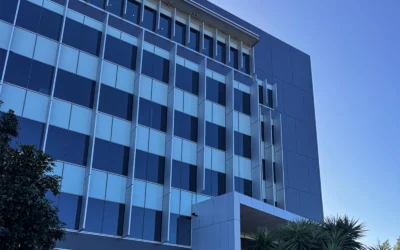
Apartment towers, office blocks, hotels, anything where the height or the ground access makes traditional methods painful. We’ve done this work across Brisbane, including jobs like the Mantra Mary St cladding project in the city. If you want the nuts and bolts of timing and cost, our deeper article on how rope access painting works, what it costs and when you need it is the next thing to read.
Ready to talk through your building?
Every tower is different and the access dictates a lot. Send us the building details or book a site assessment, and we’ll tell you straight whether rope access is the smart option for your job or whether you’d be better off with something else. We’re QBCC licensed and we’d rather give you the honest answer than win a job we’re not the best fit for.