Organising a body corporate repaint is one of those jobs that sounds straightforward until you’re actually in the middle of it. You’ve got a committee to satisfy, lot owners with opinions, residents who need to be kept in the loop, a sinking fund to draw from, and a building that needs to keep functioning normally while painters are on the scaffolding or ropes.
I’ve been doing body corporate painting across Brisbane for over 30 years. In that time I’ve seen jobs run incredibly smoothly and I’ve seen them turn into a mess. The difference almost always comes down to two things: proper preparation upfront and choosing a contractor who actually understands how strata works, not just one who knows how to paint.
This guide is for the committee chairs, strata managers, and building managers who want to understand the full picture before they start calling for quotes.
What Makes a Body Corporate Painting Job Different
The practical side of painting a body corporate building isn’t wildly different from any other large exterior repaint. Surface prep, primer, topcoat, quality control. Same fundamentals.
What’s different is everything around it.
A body corporate has residents living in it, often full time. Access needs to be managed carefully and communicated well in advance. Car parks need to stay usable. Common areas have to remain accessible. And because the committee is accountable to all lot owners, there’s a higher standard of accountability on both sides of the arrangement.
There’s also the approval process. Under Queensland’s Body Corporate and Community Management Act 1997, painting and maintenance of common property is the committee’s responsibility. The SCA Queensland FAQ page notes that sinking fund contributions exist precisely for long-term expenses like painting. But depending on the value of the works and how your scheme is structured, it may need to go to a committee resolution or, for larger amounts, a general meeting vote. We’re used to working within that process and can help you put together the documentation needed to get a motion over the line, scope of works, paint specifications, timeline, and a properly itemised quote.
When Does Your Building Actually Need Repainting?
“When it looks bad” is a common answer, and honestly, by the time a building looks visibly tired, you’ve probably already lost a few years of useful paint life.
Most exterior paint systems on Brisbane buildings last 8-15 years, depending on paint quality, original surface preparation, sun exposure, and general maintenance. Brisbane’s subtropical climate is genuinely tough on paint coatings. High UV, summer humidity, and the occasional severe storm cycle all accelerate degradation faster than you’d see in Melbourne or Sydney.
There are some specific signs worth knowing about:
Chalking is when you run your hand across an exterior wall and it comes away covered in white powder. The paint binder has broken down, which means the surface is no longer protecting the substrate underneath. It’s past its useful life.
Peeling or flaking is usually a sign of moisture getting behind the paint film, often from hairline cracks in the render or failed sealants around windows. Left unaddressed, this leads to render damage and eventually structural problems. That’s a much bigger repair bill than a timely repaint.
Fading is particularly noticeable on north and west-facing walls in Brisbane, which get hammered by afternoon sun. If those walls look noticeably different from the rest of the building, the paint is losing its UV protection capabilities.
Efflorescence (the white salt deposits you sometimes see on rendered or masonry surfaces) indicates moisture moving through the wall. Worth getting a professional eye on this before you paint over it, because painting over an active moisture issue tends to trap it and cause bigger problems later.
If you’re not sure whether your building is ready for a full repaint or whether targeted touch-ups might extend the current paint life, call us out for a no-obligation assessment. We’ll give you an honest read on it.
How the Approval Process Works in Queensland
One thing a lot of committee chairs underestimate is how much lead time a body corporate painting job actually needs, not for the painting itself, but for the approval and procurement process.
Under the Body Corporate and Community Management Act 1997, the committee is responsible for maintenance and repair of common property. But spending decisions above certain thresholds, or those involving significant changes to the building’s appearance like a colour change, may need a resolution at a general meeting rather than a simple committee vote.
The Queensland government’s body corporate guidelines suggest that painting the external building is one of the most common reasons a special levy might be needed if sinking funds are insufficient. So it’s worth checking your fund balance and getting financial advice before committing to a scope of works.
From our side, we can help you through this. We provide a full scope of works document, itemised quote, product specifications, and timeline that’s designed to be taken into a committee meeting. We’ve helped plenty of strata managers and committee chairs put together a clear presentation for lot owners. It reduces the back-and-forth and speeds up the approval process.
Step by Step: How We Run a Body Corporate Painting Job
Site assessment
We start by coming out and inspecting the building thoroughly. Exterior surfaces, paint condition, render integrity, sealant condition around windows and control joints, and access requirements. If the building is multi-storey we’ll determine the best access method, whether that’s rope access, scaffolding, or elevated platforms depending on the building’s configuration.
From that inspection we produce a detailed scope of works. Not a vague description. It specifies which surfaces are being painted, what preparation is required, what paint system we recommend and why, how access will be managed, and the proposed timeline.
Colour consultation
A repaint is often an opportunity for the committee to update the building’s colour scheme, and this is usually where the most committee debate happens. We offer a colour consultation service where we present digital renders of the building in different colour combinations. It’s much easier for a committee to reach consensus when they can actually see what the building will look like, rather than arguing over paint chip cards in a meeting room.
Worth noting: Brisbane City Council has guidelines around colour choices in certain precincts, particularly heritage areas. We’ll flag any relevant considerations during this process.
Works notification to residents
Before a single brush touches the building, residents need to know what’s happening and what to expect. We help with this, providing a plain-English works notice covering the project timeline, which areas will be affected when, how to raise any concerns, and a contact number for queries. Getting resident communication right upfront is what prevents the complaints and the angry emails to the committee chair midway through the job.
The painting works
We work methodically and with minimal disruption. Common areas stay accessible. We don’t start noisy surface preparation work early in the morning. At the end of each day, any communal spaces we’ve been working near are clean and clear.
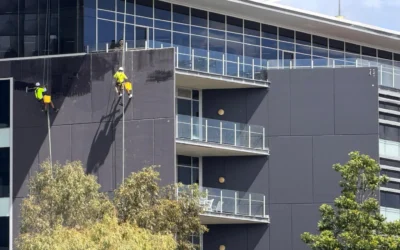
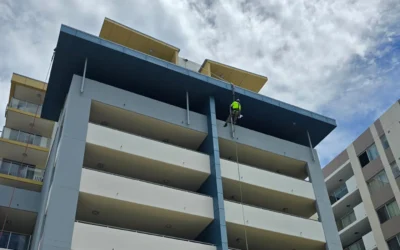
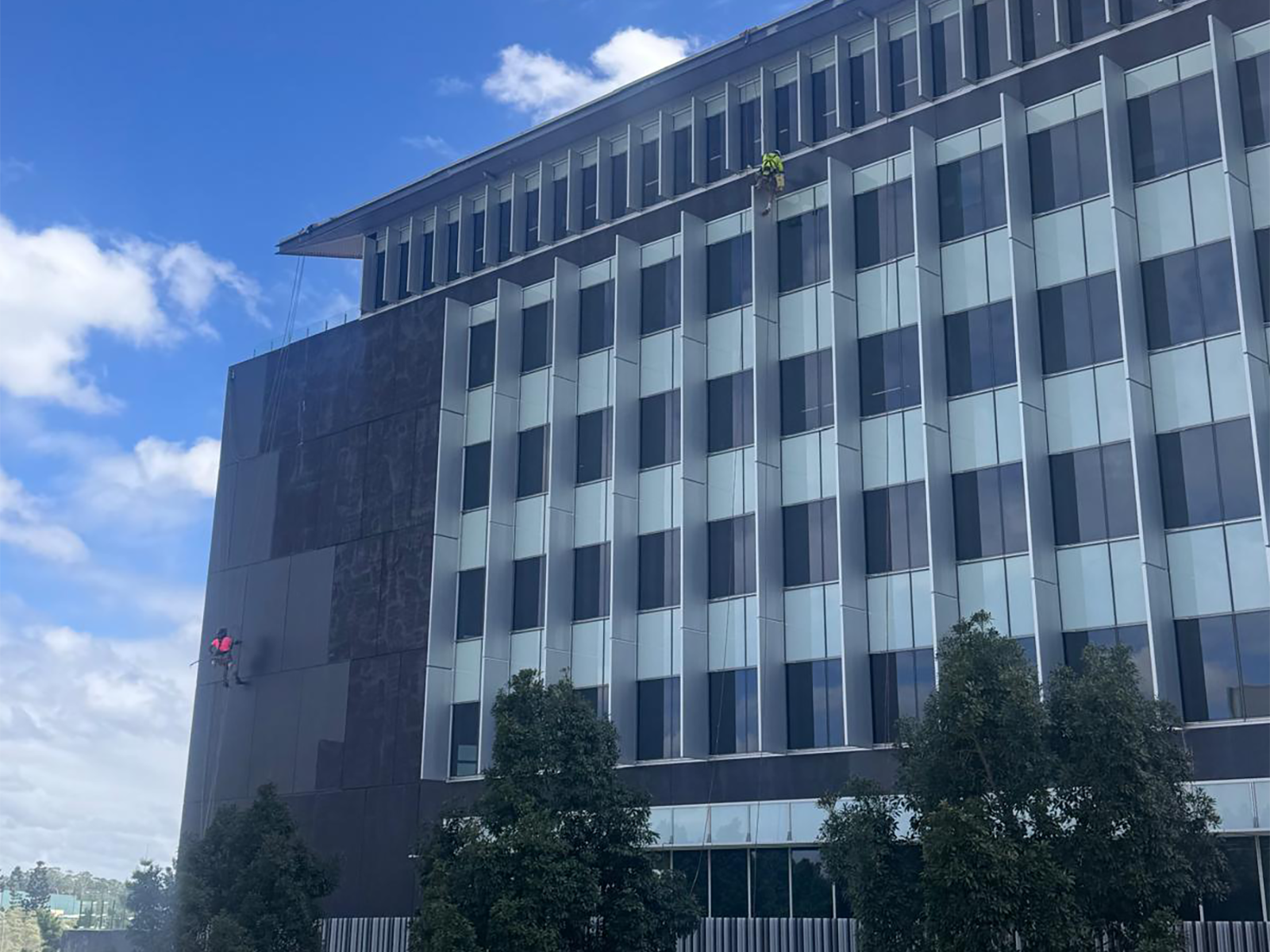
For multi-storey buildings we generally use rope access for high-level exterior work. It’s faster, less intrusive than scaffolding, and residents don’t have to look at a steel cage for weeks. For lower-level work or areas requiring extended standing work, we use the appropriate access method for that section.
Every person on the job is a McAuliffe employee. No subcontractors. That means consistent quality and a single point of accountability for every aspect of the work.
Final inspection and handover
When the job’s done, we do a proper walk-around with you or the building manager before we pack up. If something needs touching up, it gets done right then. We also provide a paint record noting exactly what products were used on which surfaces, which is useful for future maintenance touch-ups and for your building records.
Choosing the Right Painting Contractor: What to Check
This is where corporate bodies sometimes make a mistake that costs them significantly more in the medium term. The temptation is to go with the cheapest quote, and I understand the reasoning. The committee is accountable to lot owners and nobody wants to be seen overspending sinking fund money.
But the cheapest quote usually means one or more of the following: lower quality paint products, minimal surface preparation, unlicensed or undertrained workers, or a contractor who’s hard to reach when something isn’t right six months later.
A few things that genuinely matter when evaluating quotes:
QBCC licence. Any painting contractor doing work in Queensland above $3,300 in value must hold a current QBCC licence. You can verify it directly on the QBCC register before you engage anyone. If a contractor can’t give you their QBCC licence number, walk away.
Public liability insurance. For a body corporate building, you want to see a minimum of $20 million public liability coverage. Ask for a current certificate of currency, not just their word for it.
A detailed scope of works in the quote. If the quote just says “repaint exterior, $X”, that tells you nothing about what’s actually included. You can’t compare that against anything, and you’ll have no recourse if the job falls short of your expectations.
Strata experience. Painting a body corporate building requires an understanding of how strata operations work, how to communicate with residents, and how to manage a multi-week project on an occupied building. Ask specifically about their body corporate experience and ask for references from strata managers if you want them. A good contractor will have no hesitation providing them.
Frequently Asked Questions
Does the body corporate have a legal obligation to maintain the building’s exterior paint?
Yes. Under the Body Corporate and Community Management Act 1997, the body corporate is responsible for maintenance and repair of common property, which includes the building’s exterior surfaces. Letting the paint deteriorate to the point of render damage or structural moisture ingress creates liability for the committee. Proactive maintenance is generally cheaper and less complicated than reactive repair.
How much notice do residents need?
We recommend a minimum of two weeks for residents, and four weeks is better for larger projects. We’ll help you draft the communication.
What if residents have concerns about painters near their windows?
It’s a common concern and easy to manage with good communication. Our team is professional, respectful, and we let the building manager know when we’ll be working near specific floors so residents can be notified in advance.
How do you handle colour selection if the committee can’t agree?
We’ve been here before. The digital renders we provide through our colour consultation service are designed specifically to cut through this problem. Seeing the building in a colour scheme rather than looking at a 5cm paint chip makes consensus a lot easier to reach.
How do we get a quote?
Call us on 1300 733 447 or submit an enquiry online and we’ll arrange a time to come out and assess the building. The initial assessment is free and there’s no obligation.
Want to Talk Through Your Project?
If you’re a strata manager or committee chair with a Brisbane building that’s due for a repaint, and you want to talk it through with someone who knows strata, give us a call on 1300 733 447 or request a free quote here.
You can also read more about our strata and body corporate painting services and our unit complex painting experience on the site. And if your building is multi-storey, it’s worth taking a look at our commercial painting Brisbane page to understand the full scope of what we do.
We work across all of Brisbane and South East Queensland, and we’ve been doing this for over 30 years. We’re not going anywhere, and neither is the work we do.